
At the Elysium CAD & MBE Forum in Detroit, Rahim Alsaffar from Adient shared practical insights into one of the most pressing challenges in manufacturing today: transitioning from a drawing-based environment to a Model-Based Enterprise (MBE).
Understanding the Tier 1 Landscape
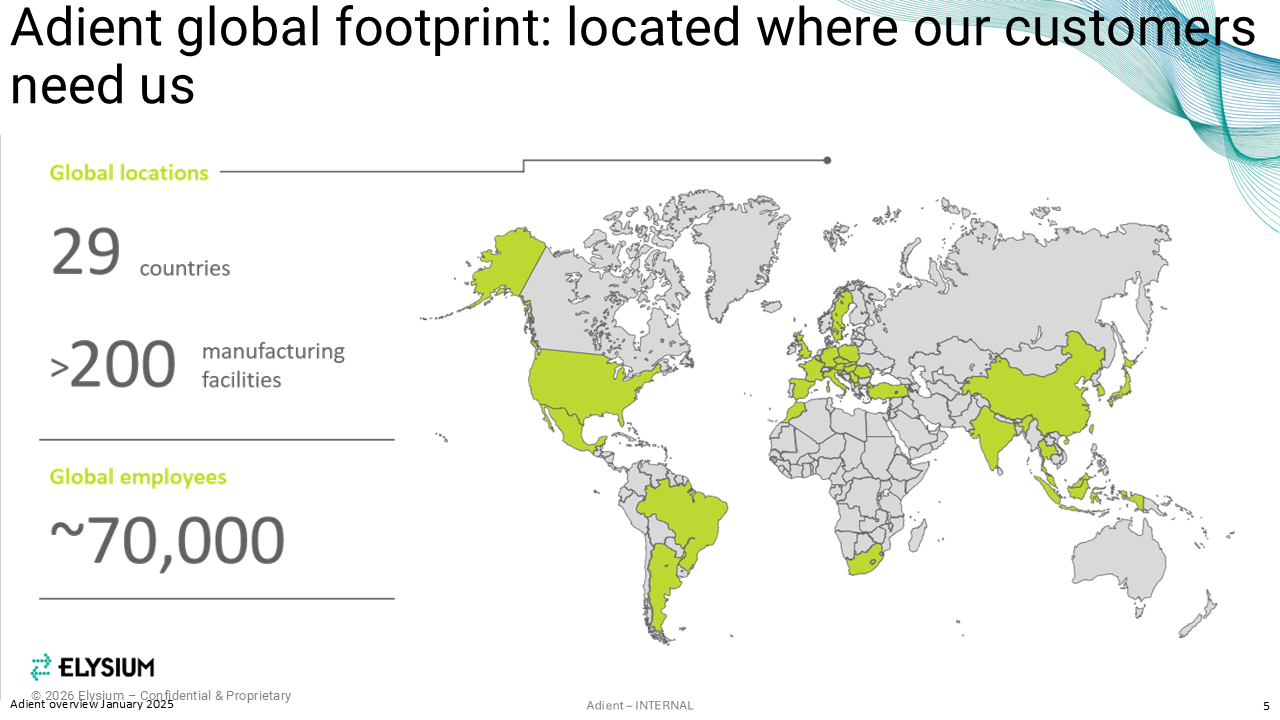
Adient is a global leader in automotive seating and operates across 29 countries with more than 200 manufacturing facilities and 70,000 employees.
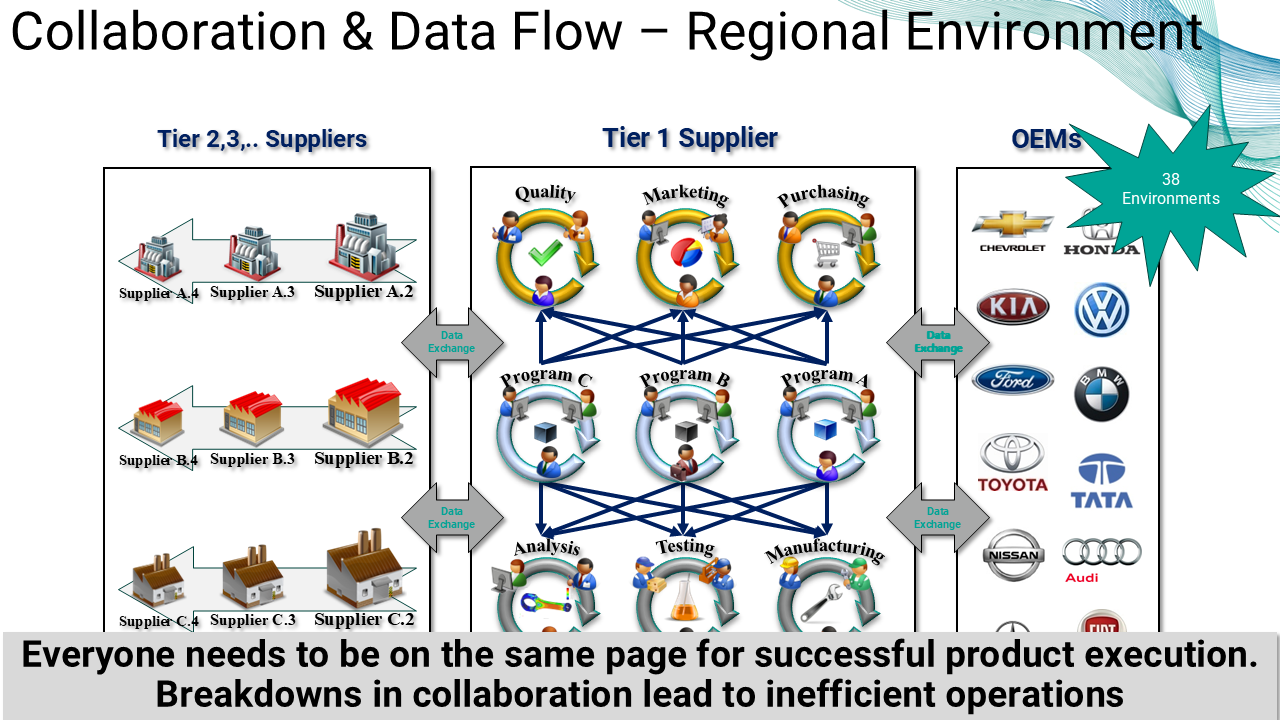
The company operates within a highly interconnected network in which OEMs define system-level requirements. Tier 1 suppliers develop and deliver subsystems, while Tier 2 and Tier 3 suppliers support the final stages of manufacturing.
Interoperability challenges arise from dozens of multinational, multi-layered collaboration environments, each operating with its preferred CAD systems, product standards, and processes.
Without proper management, these differences can result in misalignment, leading to delays, repeated design iterations, and increased costs.
The Core Challenge: Collaboration and Data Flow
Successful collaboration is the backbone of product development. However, in a traditional drawing-based environment, data flows can become fragmented.
OEMs provide requirements and system definitions, while suppliers interpret and develop OEM designs within their own systems. The resulting models must then be translated back into the OEM’s preferred source-model format.
This introduces barriers to collaboration and interoperability because different geometric modelling kernels are not universally compatible across CAD systems.
Two common collaboration models highlight these challenges:
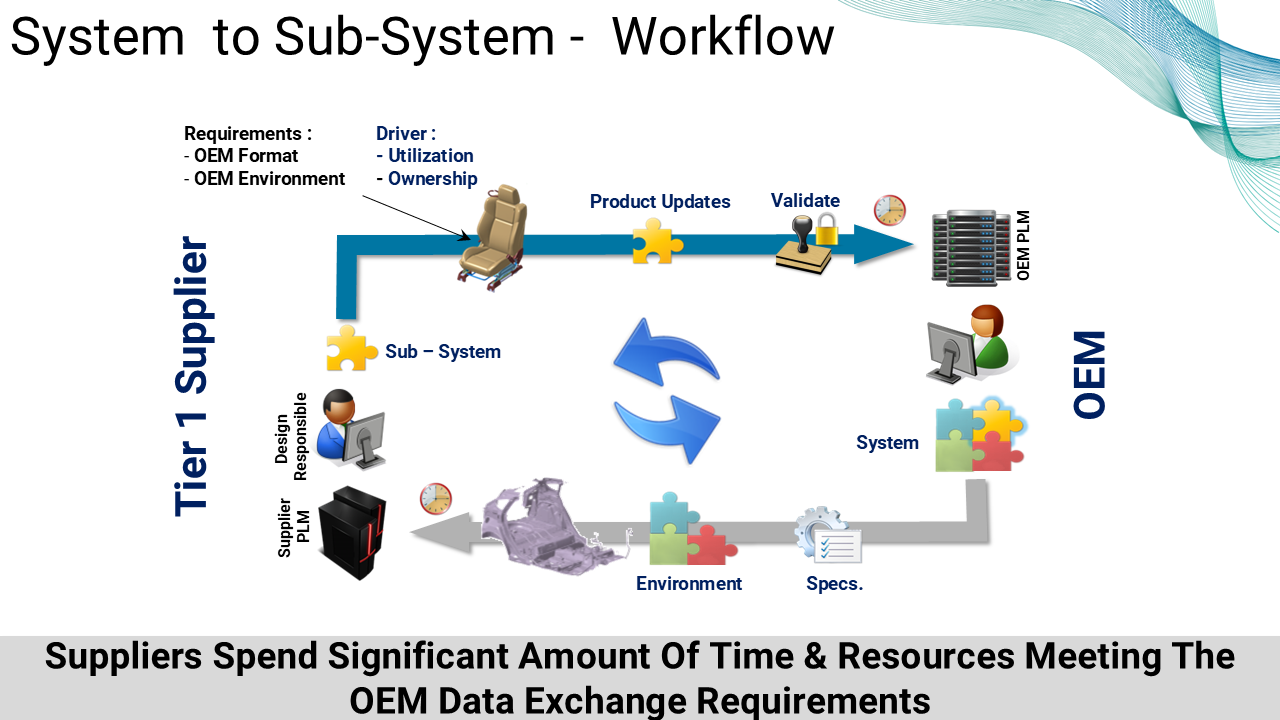
1. System-to-Subsystem Collaboration
The system is owned by the OEM, while the supplier develops a subsystem. Design data must continuously move between the OEM and the supplier while maintaining strict alignment with agreed formats and standards.
2. Build-to-Print
Suppliers receive the product definition and complete the manufacturing process. Although early data sharing is critical, frequent updates can create confusion if they are not managed properly.
It is crucial for organizations to communicate and collaborate effectively to prevent problems during manufacturing.
Product Development: Where Complexity Multiplies
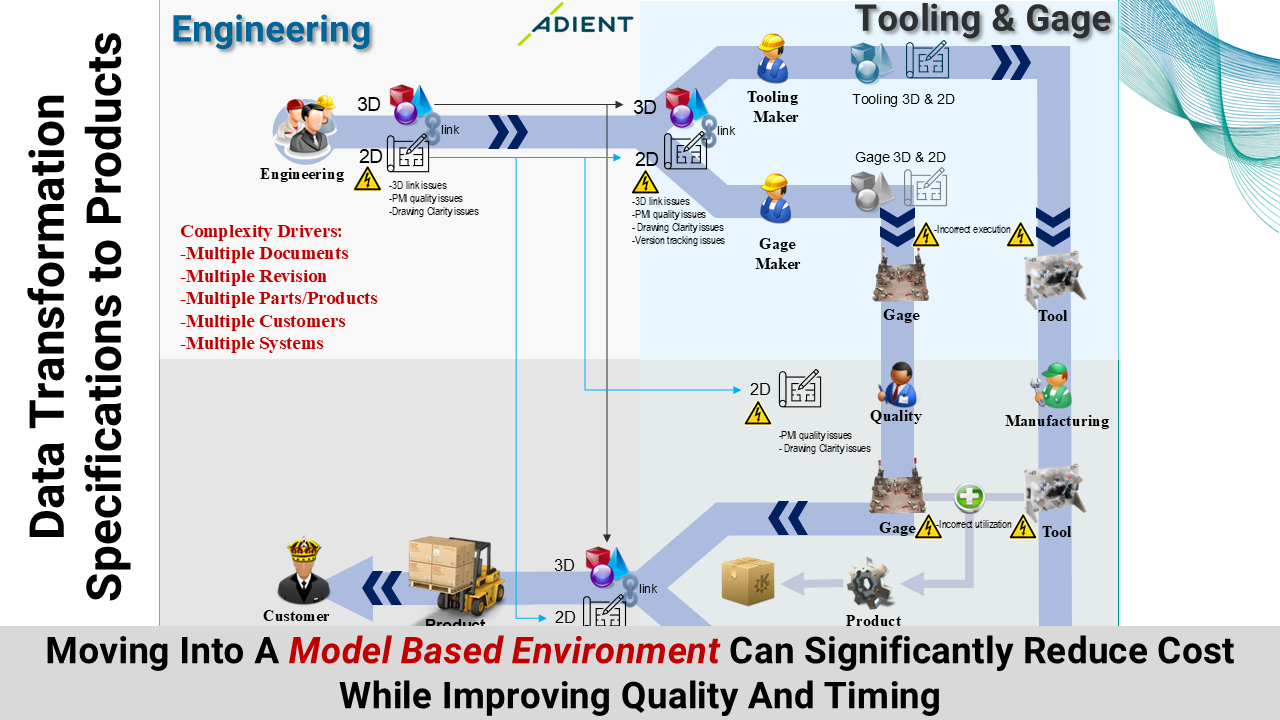
Traditionally, product development relied on two main outputs: 3D geometry and 2D drawings containing product manufacturing information. These outputs support downstream processes such as tooling, manufacturing, and quality control.
However, each of these stages generates additional documentation, including:
- Tooling designs and drawings
- Gauge designs and specifications
- Manufacturing documentation
This documentation multiplies exponentially as revisions, parts, and assemblies increase. As a result, several potential failure points emerge:
- Mismatches between 2D drawings and 3D models
- Poor PMI quality or unclear tolerances
- Version control issues across systems
- A lack of drafting expertise within modern engineering teams
Even minor inconsistencies can lead to costly mistakes, particularly when tooling is involved, where lead times and costs are significant.
Why MBE Matters
A Model-Based Enterprise advances traditional drawing-based processes by consolidating design documentation into a single authoritative digital model that includes both geometry and PMI.
This reduces document duplication, minimizes revision loops, and improves alignment between engineering and manufacturing.
In addition, MBE is becoming essential for enabling advanced technologies such as automation and AI-driven workflows, which depend on structured, model-based inputs.
In short, MBE provides the foundation for digital transformation in manufacturing.
The Reality of Transition: It’s Not Easy
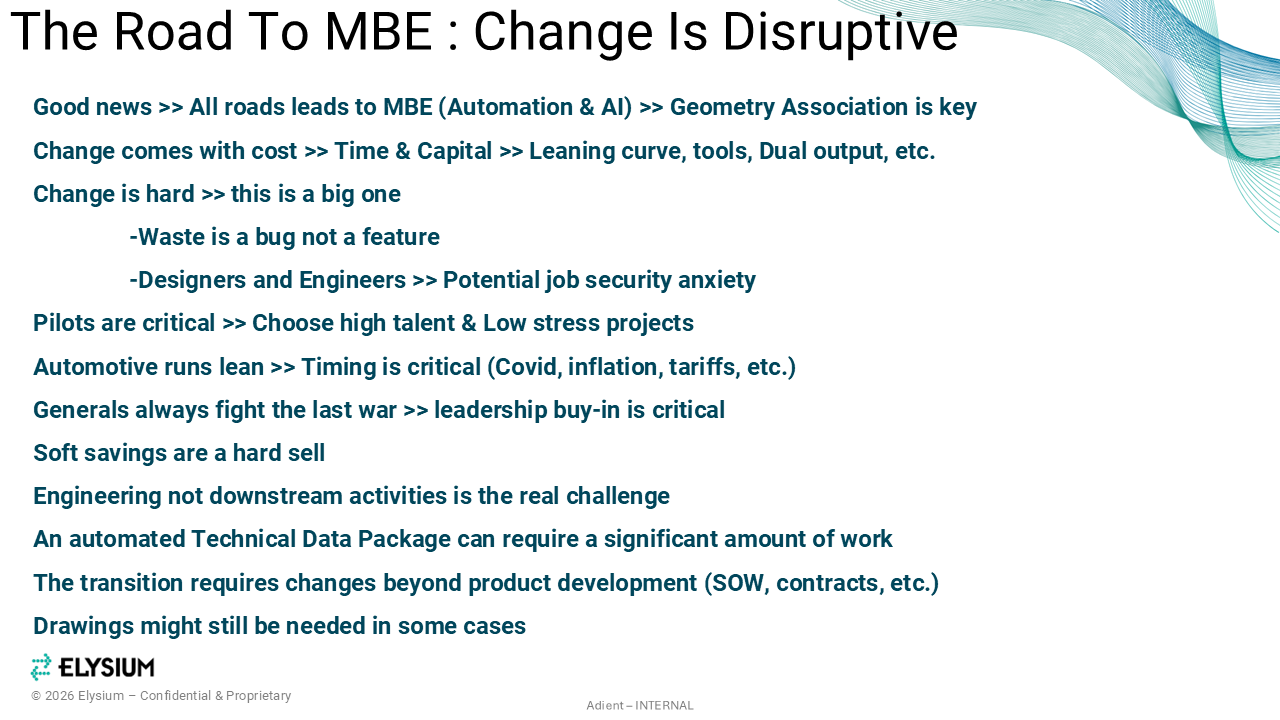
Despite its advantages, transitioning to an MBE is complex and disruptive.
Organizations must maintain both drawings and models throughout the transition period. Engineers must learn to create and interpret 3D models with PMI, while designers must develop expertise in GD&T. Teams are required to work beyond their existing comfort zones as they adopt new workflows.
There are also significant costs associated with the transition, including software, training, and process development. Engineering, manufacturing, and legal agreements must all be adapted to support a model-based enterprise. As a result, the transition extends beyond technology and requires organizational and cultural change.
The Role of Technical Data Packages (TDP)
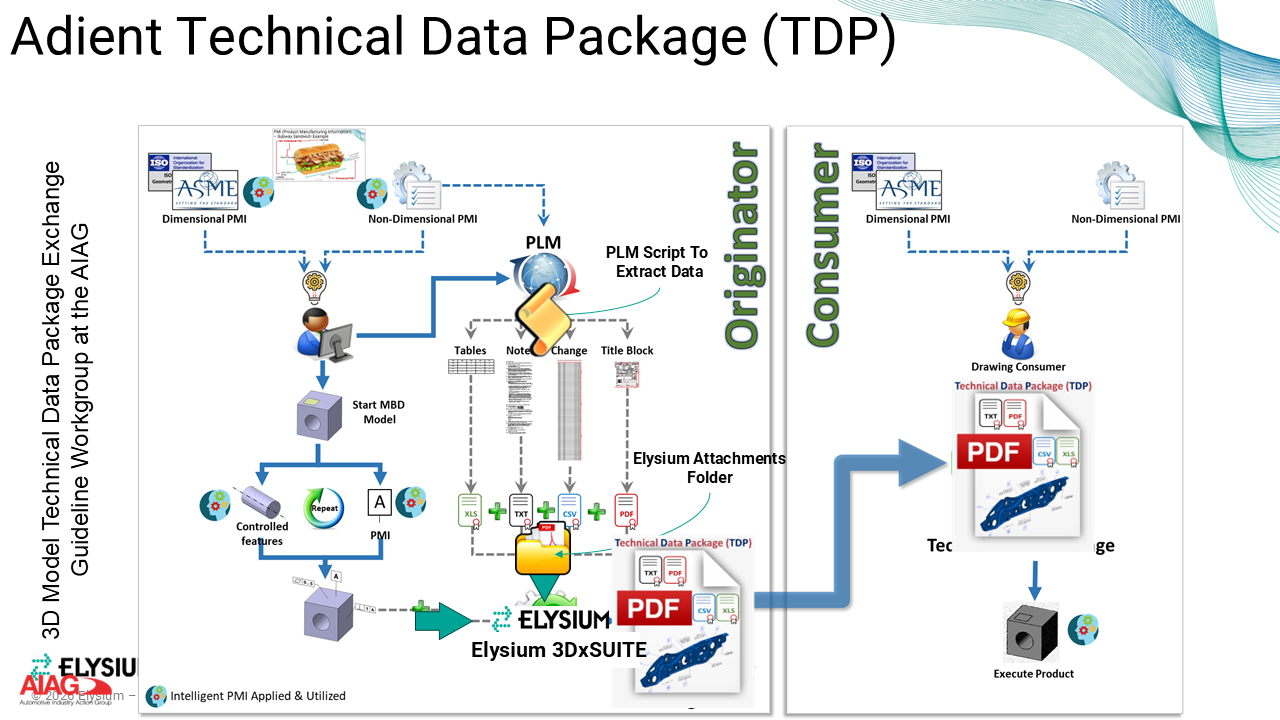
Adient utilizes Technical Data Packages (TDPs) to bridge the gap between drawing-based and model-based workflows.
Key characteristics of TDPs include:
- PDF or HTML containers for accessibility and portability
- Embedded 3D models (such as STEP files)
- PMI data
- Supporting documentation
TDPs are generated automatically through PLM systems and standardized across regions and customers.
They allow organizations to maintain a familiar, drawing-like structure while gradually introducing model-based data in an organized format. They also help ensure consistency across global operations.
Managing Change with Data Comparison
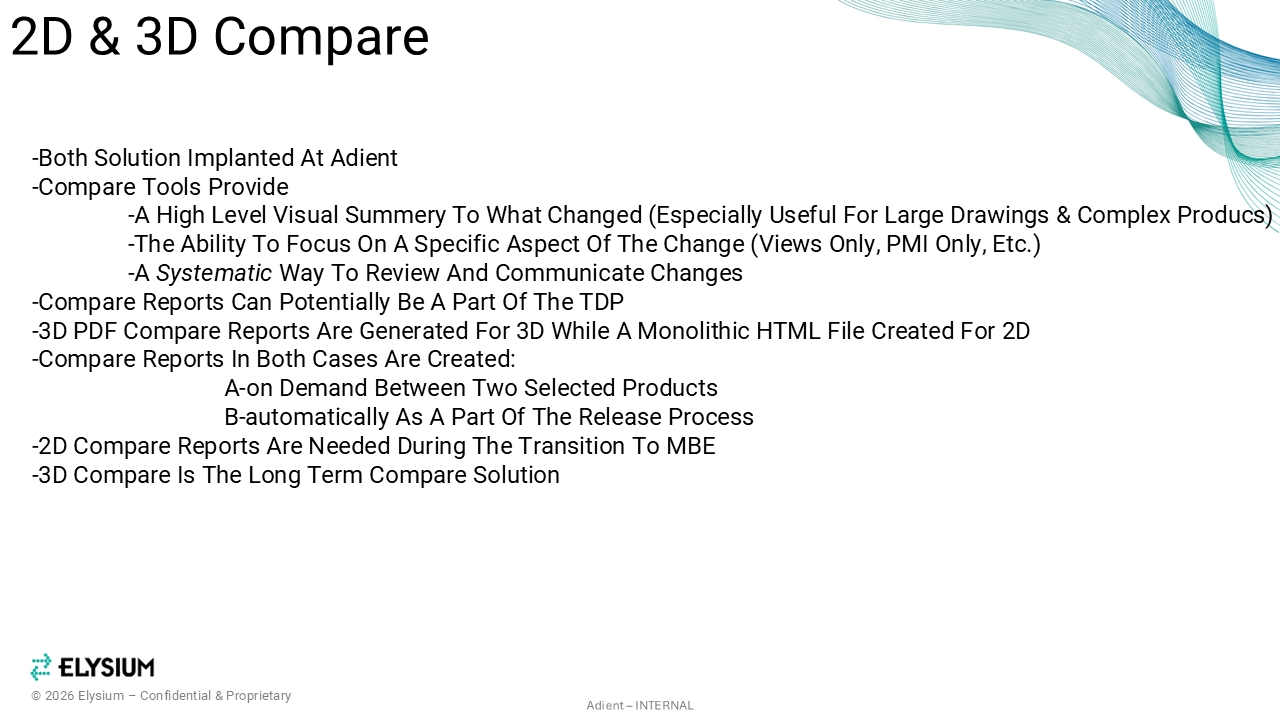
One of the most challenging aspects of reviewing design changes is understanding what has changed between revisions.
Adient addresses this by utilizing both 2D and 3D comparison tools. These tools provide visual summaries that highlight design changes quickly, reducing analysis time from weeks to minutes.
This capability significantly improves decision-making and reduces production risk.
Key Takeaways
The transition to MBE is inevitable, but success depends on how it is managed.
For Tier 1 suppliers, several lessons stand out:
- Standardization is essential in global, multi-system environments.
- Collaboration must be redefined, not simply digitized.
- Engineering processes should become the primary focus, as they represent the new bottleneck.
- Start with pilot projects involving the right teams and suitable conditions.
- Strong organizational support is essential to overcome resistance to change.
- Transitioning to an MBE takes time, and Technical Data Packages provide an effective bridge between drawing-based and model-based environments.
Looking Ahead
The question is no longer whether companies will transition to an MBE, but when.
Moving away from drawing-based environments will take time. Successfully balancing legacy processes with future-ready systems will be essential for remaining competitive in an increasingly digital manufacturing landscape.